Jaw pain is not always caused by a dental problem.
Some people experience pain while chewing, opening the mouth or talking.
Others notice clicking around the jaw, tightness in the facial muscles
or discomfort that seems to extend toward the ear, neck or temple.
These symptoms can sometimes be associated with temporomandibular joint
problems, commonly referred to as TMJ disorders.
Because jaw symptoms can have different causes, proper assessment is
important before starting treatment.
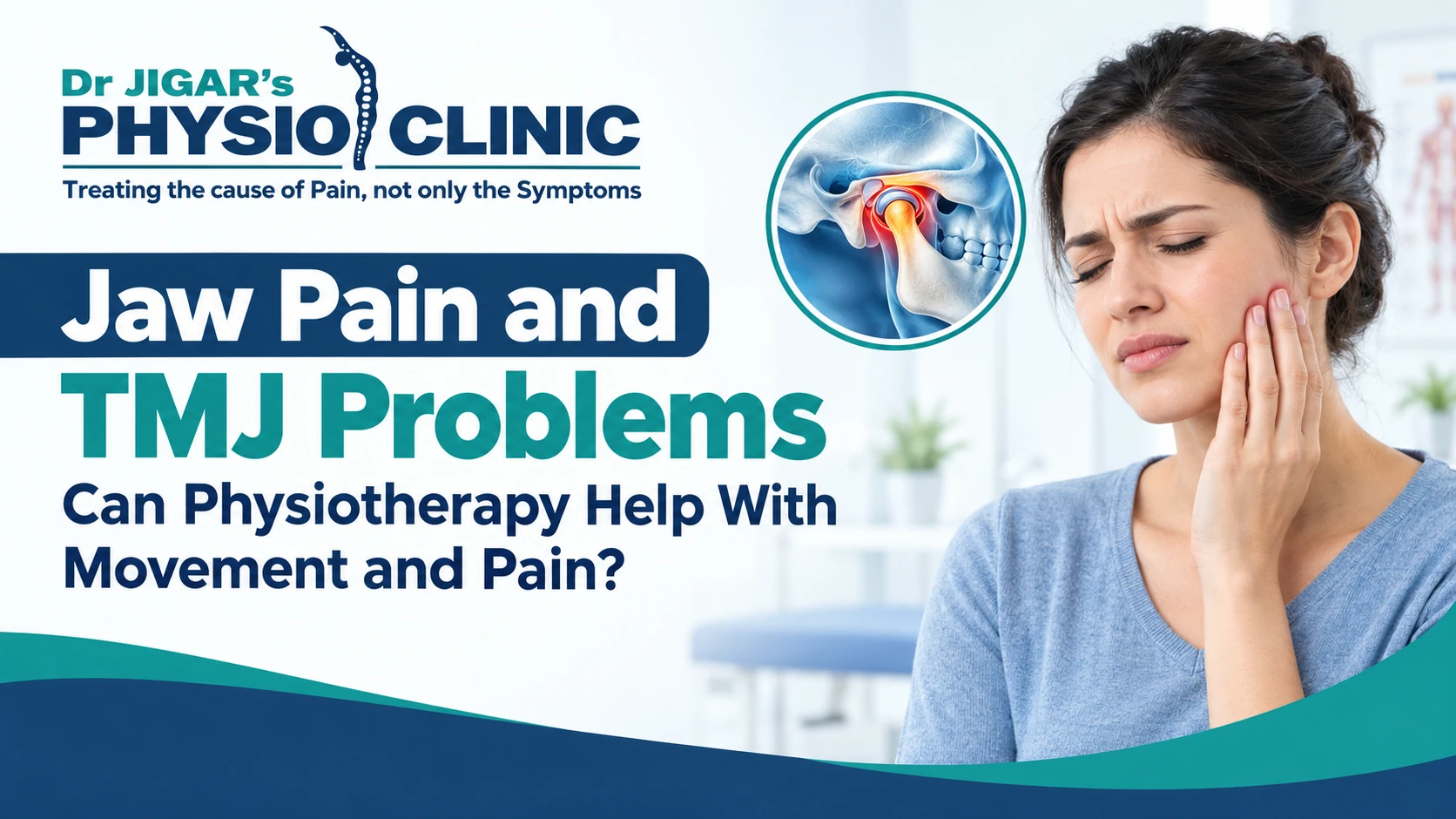
What Is the TMJ?
The temporomandibular joints connect the lower jaw to the skull.
You use these joints repeatedly throughout the day when you:
- Eat
- Chew
- Speak
- Yawn
- Open and close your mouth
The joint works together with muscles around the jaw, face and neck.
When the joint or surrounding muscles become painful or irritated,
normal activities can become uncomfortable.
Common Symptoms of TMJ Problems
Symptoms can include:
- Jaw pain
- Difficulty opening the mouth
- Jaw stiffness
- Clicking or popping
- Pain while chewing
- Facial muscle tightness
- Pain around the temple
- Ear-area discomfort
- Neck tension
- Headache associated with jaw muscle
tension
Clicking by itself does not necessarily mean that a serious problem
exists.
However, persistent pain, restricted jaw movement or significant
changes in function should be evaluated.
What Can Contribute to Jaw Pain?
TMJ symptoms can have several contributing factors.
These may include:
Jaw Clenching
Repeatedly clenching the teeth can increase muscle tension around
the jaw.
Some people clench unconsciously during the day or while sleeping.
Stress
Stress can influence muscle tension and habits such as jaw clenching.
Dental or Bite-Related Factors
Dental issues can sometimes contribute to jaw symptoms and may
require evaluation by a dentist.
Injury
A blow or other trauma involving the jaw can affect the joint
and surrounding structures.
Neck and Posture Factors
The jaw, head and neck work together during movement.
In some individuals, neck movement and muscle tension may be
relevant to their symptoms.
Can Physiotherapy Help TMJ Problems?
Physiotherapy can be useful for selected patients depending on
the underlying problem.
Treatment should begin with an assessment.
A physiotherapist may examine:
- Jaw movement
- Neck movement
- Muscle tension
- Posture
- Pain patterns
- Functional activities such as chewing
and speaking
Based on the assessment, an appropriate treatment plan can be developed.
What May Be Included in TMJ Physiotherapy?
Gentle Jaw Exercises
Specific exercises may be used to improve controlled jaw movement.
These exercises should be performed within a comfortable range
and progressed appropriately.
Manual Therapy
Depending on the assessment, gentle manual techniques may be used
to address muscle tension and movement restrictions.
Neck and Shoulder Exercises
Because the jaw and neck can work together functionally,
treatment may sometimes include exercises for the neck and
upper shoulder region.
Relaxation and Habit Awareness
Patients may be taught to recognize jaw clenching and other
habits that increase muscle tension.
Posture and Ergonomic Advice
If prolonged desk work contributes to neck and shoulder tension,
practical workstation and movement advice may be included.
What Should You Avoid If Your Jaw Hurts?
While symptoms are present, some people may benefit from temporarily
reducing activities that place excessive stress on the jaw.
Depending on the individual's condition, this may include:
- Excessive chewing
- Very hard foods
- Excessively wide mouth opening
- Repeated gum chewing
- Deliberate jaw clicking
- Prolonged clenching
Your dentist, doctor or physiotherapist can provide more specific
advice based on the cause.
Should You See a Dentist or Physiotherapist?
This depends on the symptoms.
A dentist or doctor may be appropriate when the symptoms could
involve dental, joint or medical causes.
Physiotherapy may be helpful when musculoskeletal factors such
as muscle tension, movement restrictions or neck-related problems
are contributing.
In some cases, coordinated care between healthcare professionals
may provide the most appropriate approach.
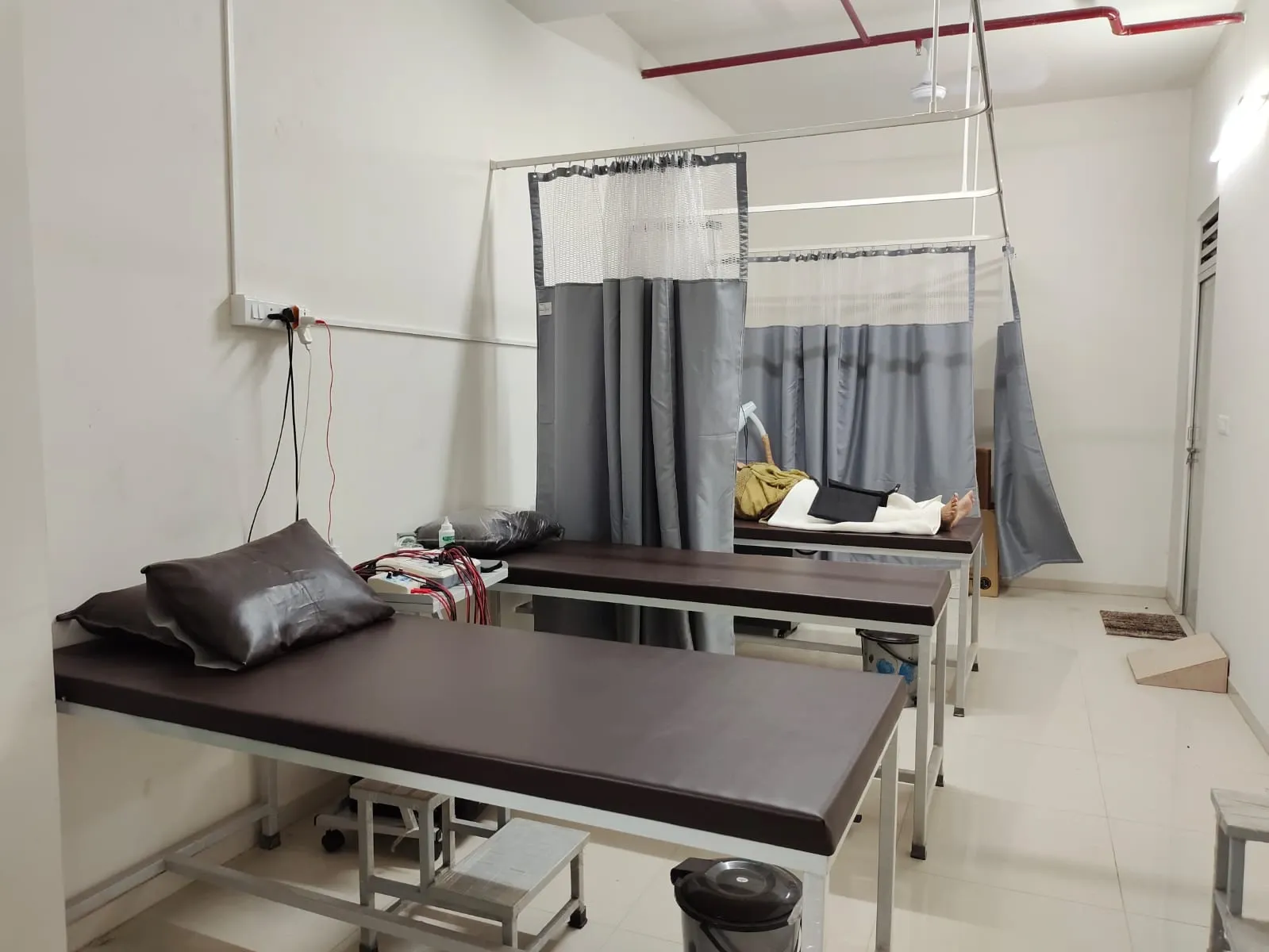
TMJ Physiotherapy in Gota, Ahmedabad
For people living in Gota, Jagatpur, Tragad and Charodi,
Dr. Jigar's Physio Clinic provides physiotherapy services
in Gota, Ahmedabad.
The clinic uses individualized assessment and treatment
approaches for musculoskeletal conditions.
Learn more about our
physiotherapy clinic in Gota, Ahmedabad
.
For patients who cannot comfortably travel, home-visit
physiotherapy is also available for selected conditions.
Explore our
home-visit physiotherapy
service for more information.
How Long Does TMJ Physiotherapy Take?
There is no fixed number of sessions for every patient.
Recovery can depend on:
- The cause of the jaw symptoms
- How long symptoms have been present
- Severity of the problem
- Muscle tension
- Daily habits
- Response to treatment
- Consistency with recommended
exercises
The rehabilitation plan can be adjusted according to progress.
When Should You Seek Medical Evaluation?
Seek professional evaluation if you experience:
- Severe jaw pain
- Significant difficulty opening the
mouth
- Jaw locking
- Recent facial trauma
- Significant swelling
- Persistent unexplained symptoms
- Difficulty eating because of pain
Jaw symptoms should not automatically be assumed to be
a physiotherapy problem.
Final Thoughts
Jaw pain can affect eating, speaking, sleeping and everyday comfort.
TMJ-related symptoms can have multiple causes, so identifying
the contributing factors is an important first step.
For people in Gota, Jagatpur, Tragad, Charodi and Ahmedabad,
physiotherapy may be considered when muscle tension, movement
restrictions or other musculoskeletal factors contribute to the problem.
An individualized assessment can help determine whether
physiotherapy is appropriate and what type of rehabilitation
may be suitable.
Contact Dr. Jigar's Physio Clinic
for clinic information and appointments.
Medical Disclaimer: This article is for educational purposes
and does not provide a diagnosis. Persistent or severe jaw
symptoms should be evaluated by an appropriate healthcare
professional.





















Get In Touch